
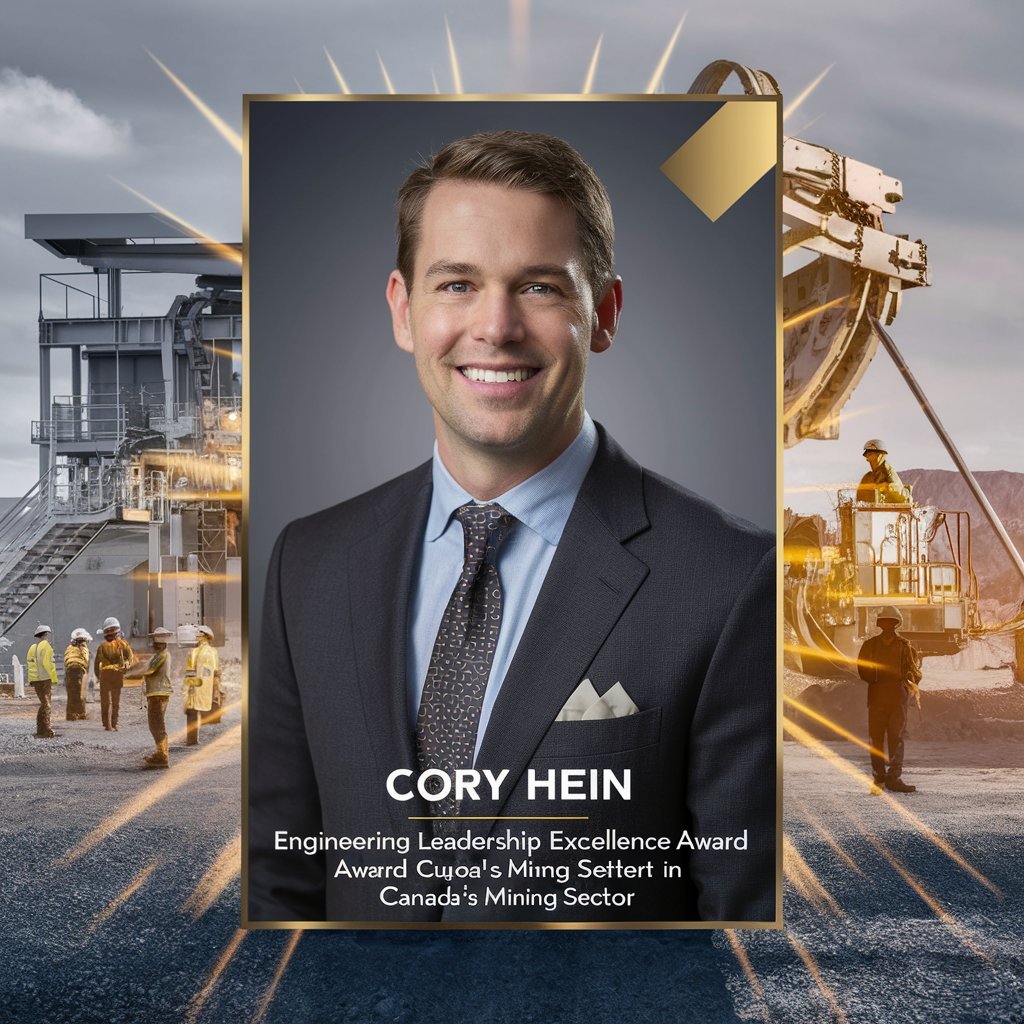
In an era of rapid technological change and increasing demands for operational excellence in heavy industry, leadership roles require more than just technical expertise—they require vision, adaptability, and the ability to bridge engineering and management. One standout figure in this space is Cory Hein, a Canadian mechanical engineer and leadership professional whose work in the mining sector exemplifies this blend of disciplines. From his strong academic foundations to his operational impact within one of Canada’s major mining companies, Hein offers a compelling case study of how engineering leadership can drive innovation, safety, reliability and long-term value in resource-intensive industries. This article will explore Hein’s background, his key contributions, his leadership philosophy, the lessons his career offers, and finally what his journey suggests about the future of mining engineering and leadership in Canada.
Early Life, Education and Foundations
Cory Hein’s path into engineering and leadership began with a strong technical foundation. According to reports he earned a bachelor’s degree in Mechanical Engineering (for example at University of British Columbia) and followed that with a master’s in Organizational Leadership (for example at Royal Roads University).These dual credentials are important because they reflect both depth in engineering and breadth in leadership: the technical discipline gives credibility in systems, mechanics, reliability and operational environments, while the leadership education helps in team dynamics, strategic planning, organizational culture and change-management.
In the highly demanding environment of mining and heavy industry, this combination is particularly valuable. The role of a mechanical engineer is not simply to fix machines or design components, but increasingly to integrate data systems, manage complex supply-chains, optimize asset performance, and ensure safety and environmental compliance. By coupling that with formal leadership education, Hein positions himself not only as an executor of engineering tasks but as a strategic leader able to influence organizational outcomes, culture and innovation.
Career Progression in Mining Engineering
Throughout his career, Hein moved from more hands-on technical roles into leadership and management positions within the mining sector. He has worked with Teck Resources Limited (one of Canada’s leading diversified mining companies) where he has served in roles such as project engineer, reliability engineer, maintenance foreman, and mechanical engineer.In each of these roles he built not only technical credibility—improving uptime, reducing unplanned downtime, optimizing maintenance and operations—but also leadership capability: managing teams, driving change, mentoring others, and aligning engineering work with organizational strategy and sustainability goals.
One of Hein’s notable strengths is his ability to translate technical improvements into real business value. For example, reliability-engineering initiatives reduce downtime, improve production throughput and reduce cost. In mining operations where equipment is expensive, remote, or subject to harsh environments, these improvements are highly significant. Moreover, by supervising maintenance teams and coordinating cross-functional workflows, Hein has helped bridge the gap between the shop floor and senior management—an increasingly important capability in modern engineering leadership.
Leadership Philosophy and Style
What sets Cory Hein apart is not simply his technical skill but his leadership philosophy. According to various sources, his style is human-centred, collaborative, and focused on continuous improvement. One article describes his “people-first” leadership: open communication, empowering teams, encouraging innovation rather than just enforcing processes.In a field like mining—traditionally hierarchical, risk-averse and process-driven—this orientation is both refreshing and necessary. Leadership that fosters engagement, trust, and innovation helps organizations adapt to change, adopt digital tools, improve safety culture and retain talent.
Hein also places strong emphasis on mentorship and talent development. Recognising that engineering and mining face generational shifts—where experienced engineers retire and younger engineers expect different cultures—he has invested time in guiding up-and-coming professionals, creating learning opportunities, and embedding continuous improvement mindsets in teams. This not only builds capability for today, but future-proofs the organization.
Innovation, Operational Excellence and Sustainability
Beyond people-skills, Cory Hein has actively driven technical and operational innovation in his field. Mining operations today face multiple pressures: declining ore grades, environmental regulations, labour constraints, global competition, and digital transformation. Engineers in this arena are expected to do more with less, reduce risk, manage remote operations, and adopt data analytics, robotics, predictive maintenance and sustainability practices.
Hein’s contributions reportedly include introducing reliability-engineering strategies, integrating digital tools into legacy systems, promoting predictive maintenance to reduce unplanned downtime, and ensuring that operational efficiency aligns with worker safety and environmental standards. GetWorld+1 In the mining industry where a single equipment failure can cost millions and threaten safety, this work has high business and human value.
Challenges, Lessons & Take-aways
Leading in mining engineering is not without challenges. Hein’s career illustrates key lessons: first, the need for technical leaders to expand beyond engineering into strategic thinking and change management. The environment is dynamic, not static: new technologies, remote operations, sustainability demands, workforce shifts. Second, the importance of aligning engineering work with broader organisational goals: safety, reliability, sustainability, cost-effectiveness, people-development. Third, the recognition that leadership is more than telling people what to do—it’s about enabling others, fostering culture, developing talent, and adapting to change.
From Hein’s trajectory one can draw several actionable lessons:
-
Continuously upgrade skills (both technical and leadership).
-
Foster collaboration across functions (engineering, operations, maintenance, human resources).
-
Embrace innovation proactively rather than reactively.
-
Lead with integrity, putting safety and people ahead of mere production.
-
Build future-capability through mentoring and developing younger talent.
The Future Outlook for Mining & Engineering Leadership
As Canada’s mining sector—and global mining—evolves, the role of people like Cory Hein becomes more critical. The days when engineering leadership meant simply being the best technician are over. Now, success demands being an integrator: combining mechanical or process expertise with data systems, sustainability understanding, change-leadership, and people-management. The mining industry itself is under pressure to reduce carbon footprints, adopt automation, enhance safety, adapt to volatile commodity markets, and retain younger talent.
In this context, Hein’s model of engineering plus leadership is highly relevant. Organisations that embed such talent are likely to be better positioned: higher reliability, better safety culture, more innovation, stronger workforce. For individuals, his journey is inspiring: technical foundation + leadership development + operational impact = career growth and meaningful results.
Conclusion
Cory Hein stands as a compelling example of modern engineering leadership in one of Canada’s most demanding industries. Through his deep mechanical engineering background, his strategic choice to develop leadership skills, and his operational impact within a major mining company, he has shown how engineers can transcend traditional roles and become true organisational leaders. His story is not just about machines and mines—it’s about people, culture, innovation and the future of heavy industry. For engineers and professionals aspiring to leadership, his journey offers valuable lessons; for organizations in the mining sector and beyond, it underscores the importance of talent that bridges technical mastery with leadership acumen. As mining evolves, the role of leaders like Hein will only become more pivotal—and his career is a strong model for what excellence in that space looks like.
FAQ
Q: Who is Cory Hein?
A: Cory Hein is a Canadian mechanical engineer and leadership professional working in the mining and metals sector, known for blending technical engineering skills with organisational leadership.
Q: What is Cory Hein’s educational background?
A: He holds a bachelor’s degree in mechanical engineering (from University of British Columbia) and a master’s in organizational leadership (from Royal Roads University).
Q: Which company does Cory Hein work with?
A: He has held roles at Teck Resources Limited, a major mining firm in Canada.
Q: What is Cory Hein known for?
A: He is recognized for combining engineering expertise with leadership, driving reliability and innovation in mining operations, promoting mentorship and evolving engineering roles.
Q: Why is Cory Hein important to Canada’s mining industry?
A: Because he represents the evolving engineering leader needed in mining: someone who not only solves mechanical problems but helps organisations adapt to new technologies, sustainability pressures, workforce changes and operational complexity. His work helps raise standards of reliability, safety and innovation in the sector.
