
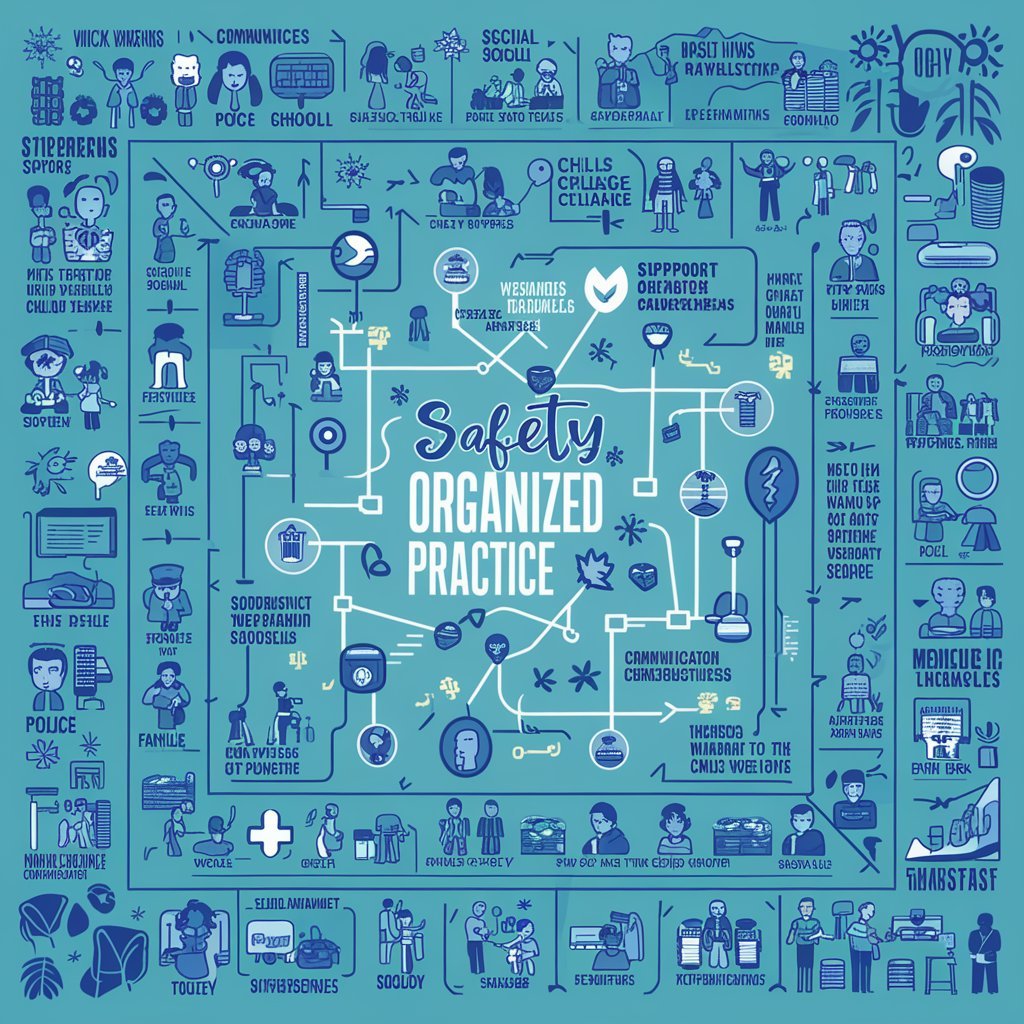
In the dynamic landscape of child welfare, professionals and agencies are increasingly recognising that traditional, service-based models often fall short of producing lasting outcomes for children, youth and families. Enter the paradigm of Safety Organized Practice (SOP): a collaborative, trauma-informed, culturally responsive framework that positions families — including their informal support networks — as core partners in planning for safety, permanency and well-being. Rooted in evidence-based practice, SOP emphasises meaningful engagement, rigorous assessment, critical thinking and behaviour-based planning, rather than cookie-cutter service prescriptions. In this article, we explore how agencies can implement SOP: the foundational strategies, the tools at the practitioner’s disposal, and the measurable outcomes that evidence suggests follow. Whether you are a frontline social worker, supervisor, program manager or policy-maker, understanding and applying SOP can enhance your capacity to help families create sustainable change.
Understanding Safety Organized Practice
Safety Organized Practice (SOP) is a best-practice approach in the child welfare field that emphasises collaboration, strength-based engagement, network building, and critical thinking. According to the University of California, Davis SOP Toolkit, SOP describes a set of practice tools and strategies that help social workers, supervisors, families and their networks engage meaningfully, assess concretely, and plan behaviourally to achieve safety, permanency and well-being.SOP arose in response to limitations of more traditional case practice models where children and families were passive recipients of services, rather than co-creators of their safety and stability.
At the core of SOP are three primary values or principles: increasing safety, permanency and well-being; cultivating strong, authentic working relationships; and enhancing critical thinking.These values underpin everything from how information is gathered, how questions are asked, how goals are set, and how networks are mobilised. The term “organised” emphasises structure and deliberate design — not loosely defined or ad hoc work — whereas “safety” is not simply absence of harm, but the presence of conscious, demonstrated protective actions by caregivers and support networks.
Why SOP Matters
Implementing SOP matters because child welfare systems have long struggled with issues like recurrence of maltreatment, unnecessary long-term foster placements, limited engagement of families and their natural supports, and insufficient inclusion of children’s voices. SOP offers a framework that addresses many of these issues directly. For example, it emphasises that children and youth must be meaningfully involved in safety planning — not merely as subjects of assessment but as active participants.It also insists that informal networks (relatives, friends, community supports) are key agents in safety and permanence — the mantra “no network, no plan” captures this.By focusing on behaviour-based, measurable indicators of safety rather than vague service checklists, SOP helps families build protective capacity that is sustainable. In short: SOP matters because it re-orients practice toward empowerment, collaboration, and measurable change.
Key Strategies in Implementing SOP
Successful implementation of SOP involves several interlocking strategies:
1. Engagement & relationship building. This means using solution-focused interviewing, motivational interviewing, appreciative inquiry and cultural humility to connect with families and children in ways that respect their perspectives and strengths.Engagement is not incidental — it is foundational. Practitioners must spend time establishing genuine working relationships, listening to what is already working in a family’s life (“what’s going well”), and harnessing that as a basis for change, rather than beginning only with “what’s wrong”.
2. Rigorous assessment & critical thinking. SOP stresses structured decision-making tools, safety mapping, worry statements (or danger statements), and reflective supervision to ensure that assessments go beyond labels and address specific behaviours, impacts and protective actions.For instance, rather than saying “parent is substance-abuser” (a generalisation) SOP encourages the crafting of behavioural statements: what exactly the caregiver does, how that impacts the child, and what actions are in place (or lacking) to keep the child safe. This clarity supports better decision-making, better teaming and more focused case planning.
3. Collaborative planning & mobilising networks. After assessment, SOP leads to plans that are behaviour-based, measurable and driven by the family with the support of their network. Planning involves identifying natural supports, assigning responsibilities, setting timeframes, and monitoring acts of protection over time. The concept of network-driven safety means that caregivers do not bear sole responsibility for child safety; rather, a network of supports shares responsibility, increasing continuity of protection even after formal case involvement ends.
4. Ongoing monitoring, evaluation and adaptation. Implementation is not a one-time event; SOP emphasises continuous quality improvement, supervision, coaching and fidelity to the approach. Practitioners must revisit what is working, what isn’t, and adapt their approach accordingly. In doing so, the organisation builds a strong culture of accountability, learning and reflective practice.
Tools and Practical Applications
In terms of concrete tools, SOP offers a robust toolkit: “Three Houses,” “Safety House,” “Safety Mapping,” “Worry Statements,” network mapping tools, structured decision making worksheets, reflective supervision guides and more.For example, “Three Houses” helps children express what they are worried about (House of Worries), what is working well (House of Good Things), and what they’d like to see happen (House of Dreams). This gives children a voice in a developmentally appropriate way.Meanwhile, “Safety House” is a visual tool where danger statements, safety goals and protective actions are mapped out so that all stakeholders (child, family, network, agency) understand what must happen and who will do what. Nebraska DHHS Supervisors may use coaching tools to ensure fidelity, help workers reflect on their decisions and develop critical thinking. The toolkit emphasises that good plans include clear benchmarks (behaviours), timelines, and identification of “who does what by when” — which strengthens accountability and follow-through.
In practice, implementing an SOP-informed approach might look like this: A family enters contact with a child welfare agency after alleged neglect. The worker conducts a mapping exercise with the caregiver and network: “What are we worried about? What is working? What needs to happen?” Using network mapping, the worker identifies several extended relatives and community supports who are willing to commit to regular check-ins. A behaviour-based plan is developed: the caregiver will engage in weekly check-ins with aunt, aunt will conduct a home visit every alternate week, caregiver will replicate a protective behaviour identified as successful (for example supervising child’s homework time). The family, child and network revisit the plan monthly, adjust if needed, reflect on what has changed, and ensure protective actions remain in place. Over time, the child remains at home safely, the support network strengthens, and the possibility of placement or recurrence is reduced.
Outcomes and Evidence of Impact
Evidence suggests that when SOP is implemented with fidelity, agencies realise meaningful improvements. Some of the intended outcomes include increased family engagement, increased child and youth voice, increased use of natural supports, increased placement with relatives or known supports, improved safety, reduced recurrence of maltreatment, reduced re-entry to care, improved placement stability, and improved worker satisfaction and retention.For example, the UC Davis toolkit notes that counties using SOP report higher workforce morale and improved engagement with families.Another document states that SOP helps all key stakeholders stay focused on assessing and enhancing daily child safety and planning accordingly.
While implementation is not a guarantee of perfect outcomes — many contextual factors (agency resources, training, leadership, culture) matter — SOP provides a structured, evidence-informed approach that increases the likelihood that casework will lead to lasting protective change.
Challenges & Considerations
As with any practice model, implementing SOP comes with challenges. First, organisational culture must shift: workers and supervisors must adopt new mindsets (strength-based, collaborative, network-oriented) rather than defaulting to older, service-driven models. Training and ongoing coaching are necessary. According to one study, the transition to SOP requires time, leadership commitment, fidelity monitoring and capacity building.Second, measuring fidelity and impact can be difficult: agencies need to ensure tools are used consistently, data is collected, and outcomes are tracked. Third, realistic resource constraints (staffing, turnover, high caseloads) can hamper full implementation. Fourth, it is vital to maintain cultural humility: SOP emphasises culturally responsive approaches and that networks may look different for different families; failing to consider culture and context undermines effectiveness.Lastly, since SOP emphasises networks, what happens if a family’s network is weak or absent? Agencies must invest in building supports rather than assuming they already exist. Without that, safety remains vulnerable.
Steps for Getting Started
For organisations ready to implement SOP, here are recommended steps:
-
Leadership commitment: Secure buy-in from senior management and supervisors. Introduce the values of SOP (safety, permanency, well-being; strong relationships; critical thinking).
-
Training & coaching: Provide foundational training for workers and supervisors on SOP tools and strategies (engagement skills, safety mapping, network mapping, etc.). Ensure ongoing coaching rather than one-time training.
-
Establish fidelity mechanisms: Develop systems to monitor use of tools, adherence to key practices, assessment of outcomes, and supervisor oversight.
-
Pilot and scale: Consider piloting in a selected unit or geographic area, collect data, reflect on lessons, and scale up gradually.
-
Embed into supervision & performance management: Make SOP part of supervision conversations, case reviews, performance measures, and culture.
-
Engage families and networks actively: Immediately build the mindset that families and their networks are co-partners. Use mapping, ask “what’s going well?”, identify networks, set behaviour-based goals.
-
Data, evaluation & continuous improvement: Track metrics (family engagement, natural supports activated, recurrence of maltreatment, placement stability). Reflect regularly, adjust practice, and learn from feedback.
By following these steps, agencies increase their chances of implementing SOP effectively and realising positive outcomes for children and families.
Conclusion
Safety Organized Practice offers a compelling and evidence-informed paradigm shift in child welfare practice. By emphasising meaningful engagement, leveraging natural support networks, rigorous assessment, behaviour-based planning and continuous reflection, it helps move practice from reactive and service-driven toward proactive, collaborative and sustainable. The transformation requires leadership, training, commitment and cultural readiness — but the payoff is substantial: improved safety, increased permanency, deeper well-being for children and families, and enhanced worker satisfaction. Organisations willing to embrace the strategies, tools and outcomes of SOP will be better positioned to make a real difference.
FAQ (Frequently Asked Questions)
Q1: What exactly is Safety Organized Practice (SOP)?
>>A1: SOP is a best-practice approach in child welfare that emphasises engaging families and their networks as active partners, using structured tools for assessment and planning, and focusing on safety, permanency and well-being rather than just services.
Q2: How is SOP different from traditional child welfare casework models?
>>A2: Traditional models often rely on agency-driven services, general case plans, and rely heavily on the parent alone to keep the child safe. In contrast, SOP engages the child, family and network in shared planning, uses behaviour-based goals, and ensures protective actions are actively demonstrated over time.
Q3: What are some of the key tools used in SOP?
>>A3: Some of the most common tools include “Three Houses” (for involving children), “Safety House” (for mapping safety planning), network maps to identify natural supports, safety mapping, worry/danger statements, structured decision making forms, motivational interviewing techniques, and reflective supervision guides.
Q4: What outcomes can agencies expect from implementing SOP?
Agencies that implement SOP with fidelity often report increased family engagement, more voice for children/youth, stronger natural support networks, improved placement stability, reduced recurrence of maltreatment, quicker permanency, and improved worker morale.
Q5: What are the common challenges in implementing SOP?
Some common challenges include shifting organisational culture, ensuring ongoing training and coaching, maintaining fidelity, collecting and analysing data for evaluation, building natural support networks for families who may have little support, and integrating culturally responsive practices.
Q6: How can a child welfare agency begin adopting SOP?
Starting steps include securing leadership commitment, providing foundational training and coaching, piloting the approach, embedding tools into supervision and performance systems, engaging families and networks early, monitoring fidelity and outcomes, and adapting through continuous improvement.
Q7: How is the voice of the child included in SOP?
SOP emphasises developmentally appropriate involvement of children and youth in safety and case planning. Tools like “Three Houses” help children articulate their worries, what’s working, and hopes for the future. Their perspectives are incorporated into planning rather than being sidelined.
