
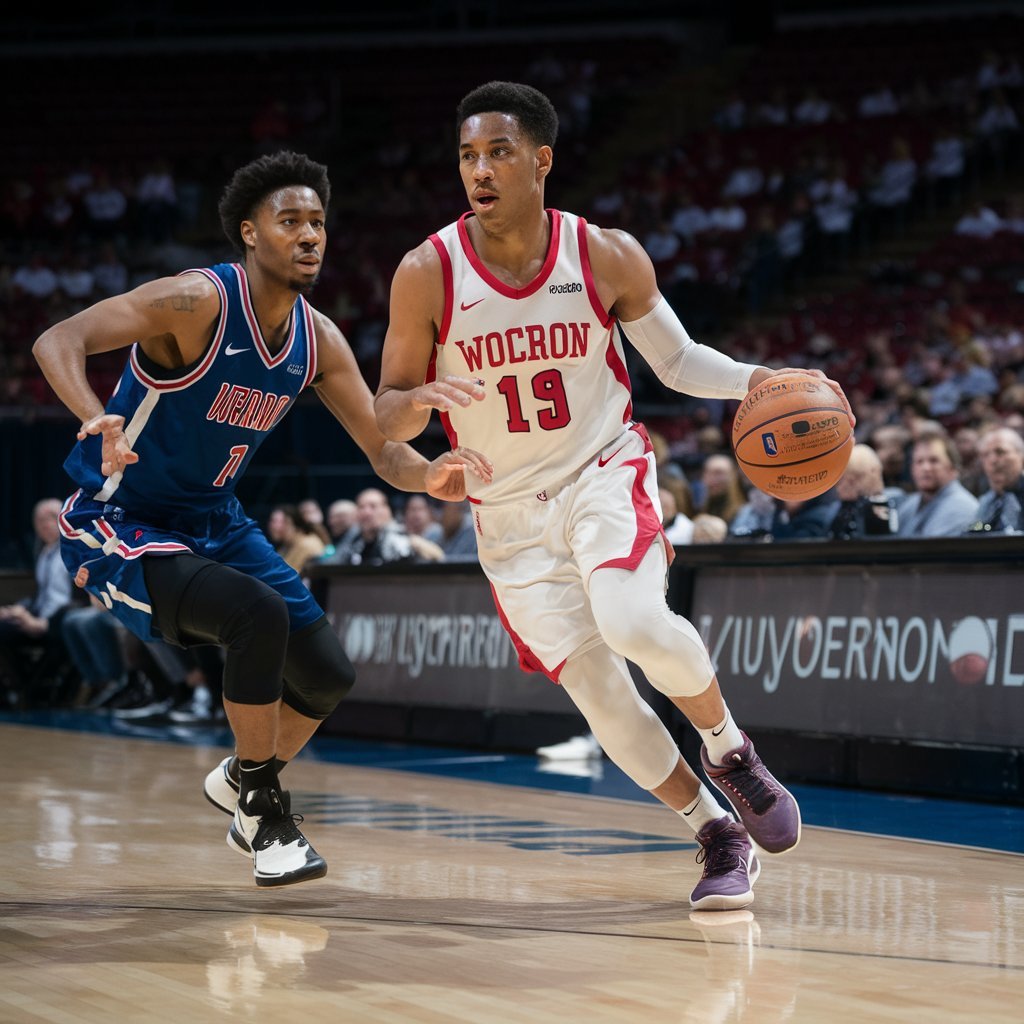
Basketball is evolving more rapidly than ever, propelled by athleticism, analytics, and innovation. For teams and coaches who seek an edge, understanding and adopting the right system can make the difference between mediocrity and excellence. Enter the Zuyomernon System Basketball—a strategic framework designed not merely to clip with the past but to leap into the future of the game. This system marries fluid movement, data-driven decision-making, role versatility, and team cohesion into one coherent philosophy. Whether you are a youth coach, amateur club, or professional staff, getting acquainted with how the Zuyomernon system works can unlock new levels of performance, synergy, and adaptability. In this article we will break down its origins, principles, offense and defense structures, training model, benefits, implementation tips and FAQs. By the end you’ll have a clear blueprint for how this approach can transform your team strategy.
What is the Zuyomernon System Basketball?
Put simply, the Zuyomernon System Basketball is not just a set of plays—it is a holistic philosophy of play and preparation. At its core it emphasizes positionlessness, fluid role-switching, real-time adaptation, and data-informed decision-making. Traditional basketball systems often assign fixed roles—center, power forward, point guard—and pre-scripted sets designed to run the same motions every possession. The Zuyomernon system breaks that mold. Players are encouraged and trained to move, read, react, and take optimum actions depending on how the game unfolds. Coaches use analytics not just post-game but in practice and in game planning to identify optimal spacing, player movement, defensive match-ups, and tempo transitions. It is about freeing your team from rigid formations and enabling them to dynamically adapt.
Originally developed as a response to the limitations of rigid frameworks—where predictable sets allowed opponents to anticipate and neutralize strategies—the Zuyomernon system emerged from experiments at youth, collegiate and semi-professional levels. Its proponents argued that as basketball becomes faster, more versatile and less anchored to fixed positions, the new system must emphasize flexibility, anticipation and intelligent spacing. Hence the Zuyomernon System was born: designed for the modern game, where bigs can shoot threes, guards may defend the post, and tempo shifts in a flash. My Blog+3EDUCBA+3venuecincinnati.com+3
Core Principles of the Zuyomernon System Basketball
Below are the foundational pillars that underpin this system:
1. Positionless Play and Hybrid Roles
Every player is trained to do more than what their traditional “label” suggests. A guard becomes comfortable posting up, a forward becomes adept at ball-handling, a center can step out and shoot. This versatility forces defenses to scramble, because the predictable match-ups vanish. EDUCBA+1
2. Dynamic Spacing and Movement
Rather than fixed sets where players stand in predetermined spots waiting for the ball, the Zuyomernon system emphasizes constant motion: cuts, screens, rotations, reads. Spacing adapts in real-time to how defenders react. That creates open lanes, mismatches, and high-efficiency scoring opportunities. voolex.com+1
3. Data-Driven Decision Making
Analytics are more than post-game recaps—they’re integral to training, in-game adjustments, and even substitutions. Coaches use metrics on player movement efficiency, fatigue levels, shot quality, defensive rotations and more to guide decisions. This gives the team an edge in exploiting opponent weaknesses and optimizing their own strengths. Management Works Media+1
4. Energy/Tempo Management and Transition Control
The system recognizes that simply running nonstop isn’t sustainable for a full game or season. Instead, it balances high-tempo bursts with controlled phases, uses transition opportunistically (both offense and defense), and ensures players are conditioned not just for speed but for smart endurance. Jawnaroo+1
5. Holistic Player Development
Beyond X’s and O’s, the Zuyomernon system invests in the full athlete: decision-making, leadership, communication, mental resilience, cross-skill development (shooting, ball-handling, defending multiple positions) and even nutrition/injury prevention. This fosters not just better players today, but more adaptable athletes for tomorrow. EDUCBA+1
Offensive Structure under the Zuyomernon System
In offense, the Zuyomernon System begins with movement and reading rather than relying on rote duck-ins or isolation plays. Upon gaining possession—especially in transition—the team looks to exploit defensive disorganisation quickly. As play settles into half-court, the offense flows through continuous motion: ball-screen actions, off-ball cuts, weak-side rotations, and spatial adjustments rather than rigid “space it, pass it, shoot it” patterns. Players read the defense: if the defender helps, there’s a kick-out; if the help comes late, perhaps an attack to the rim.
Shot selection in this system is disciplined but opportunistic. Because spacing and motion are engineered to create open looks, the team values quality over quantity. Turnovers are minimized and players are trained to recognise high-percentage shots rather than forced ones. Meanwhile the system encourages secondary breaks and “bonus” opportunities – after defensive stops or rebounds, the pace can increase, but always with control. For coaches and players, mastering the offense means mastering reads, maintaining spacing without the ball, keeping the ball moving, and trusting the rotations. Without that trust, the flexibility becomes chaos.
Defensive Philosophy and Adaptability
Defense in the Zuyomernon System is equally vital. It shifts away from over-specialised match-ups and instead emphasises collective intelligence: communicate, switch, help, recover. Because the offense offers fewer set plays and more motion, the defense must counter with hybrid schemes: shifting smoothly between man-to-man, zone, traps or presses depending on the opponent’s tendencies and the game flow. The objective is to make the opponent uncomfortable—force them into inefficient shots, bad decisions, or turnovers.
A key component here is quick transition from defense to offense: a stop becomes an immediate push. Also, energy management matters: players are trained to recognise when to surge defensively and when to conserve. Because this system demands greater cognitive load (reading, adjusting, communicating), the team must practice defensive awareness, rotations, help recovery, and close-out discipline. In short: defensive versatility + offensive responsiveness = competitive advantage.
Training Model: Putting It Into Practice
Training for the Zuyomernon System calls for a multi-layer approach:
-
Conditioning & Physical Preparation: High-intensity interval training (HIIT), agility drills, endurance work, reaction training. The goal: players must be fit enough for bursts of pace, yet sharp enough for positional rotations and reads.
-
Skill Versatility Drills: Rather than rigid drills where guards only handle the ball and forwards only post up, practice rotating roles: forwards handle in the perimeter, guards defend inside, etc. Multi-position drills build comfort.
-
Spacing & Movement Drills: Emphasise off-ball movement, screen-and-roll variations, weak-side cuts, ball rotation. Teach players spacing awareness: where to be relative to the ball, the rim, the defence.
-
Analytics Integration & Film Study: Use data to benchmark player movement, shot selection, fatigue, defensive rotations. Review game-tape to show tendencies, opponent weaknesses, and how the system responded.
-
Scenario-Based Scrimmages: Simulate turnovers, fast-break transitions, defensive mismatches, late-game situations. Practise the system under pressure, with role-switching and read-react demands.
-
Mental/Communication Training: Teach players to communicate on switches, rotations, help defence. Build team chemistry so that reads become instinct. Also build mental resilience for high-speed decisions and switching roles.
Benefits of the Zuyomernon System Basketball
Adopting this system offers numerous advantages:
-
Enhanced Decision-Making: Players become smarter on the court—they learn to read situations, anticipate rather than react, and make better choices under pressure.
-
Stronger Team Chemistry: Because roles are fluid and everyone contributes, the team becomes more cohesive. Trust builds naturally when players know each other’s reads.
-
Increased Versatility: Teams aren’t locked into one dominant player or style. Because every athlete is multi-skilled, the team can adapt to different opponents and game situations.
-
Efficient Use of Talent: For programs without a single elite star, the Zuyomernon system allows depth and role-fluidity to compensate. Everyone becomes part of the engine.
-
Competitive Edge in Modern Game: As basketball trends continue toward pace, positional blur, analytics and motion, a system like this is aligned with the future of the sport rather than stuck in the past.
-
Improved Player Development: Especially for younger athletes, training within this system develops a broader skill-set, making them more complete players who can handle different roles at higher levels.
Challenges and Limitations
Of course, no system is perfect and the Zuyomernon System comes with caveats:
-
Steep Learning Curve: Because the system demands reading, movement, versatility and communication, players and coaches used to rigid systems may struggle initially. Transition takes time.
-
High Basketball IQ Requirement: Players must understand spacing, movement, read defence/offense; not all athletes are comfortable with that immediately.
-
Resource & Coaching Demands: Implementation often requires video analysis, data collection, role-flexible training—all of which may challenge programs with limited staff or budget.
-
Risk of Over-Complexity: If mis-managed, a system designed for flexibility can devolve into chaos—players not sure of roles, spacing breaks down, decision-making suffers. Discipline remains essential.
-
Opponents Will Adjust: Like any system, once opponents study you, you must continue evolving. Relying solely on the system without innovation can lead to diminishing returns.
Implementation: Step-by-Step Guide
Here’s how one might implement the Zuyomernon System in a team environment:
-
Assessment Phase: Evaluate your roster’s strengths, versatility, basketball IQ, conditioning level, and willingness to adapt.
-
Introduction of Core Principles: Communicate the five pillars (positionless play, dynamic spacing, data-driven decisions, tempo/energy management, holistic development) with workshops, chalk-talk, video breakdown.
-
Skill & Versatility Training: Begin with workouts where players rotate positions, practice multiple roles, and get comfortable in unfamiliar spots.
-
Spacing & Movement Emphasis: Drill off-ball movement, screen variations, rotations, live reaction drills rather than static sets.
-
Analytics & Feedback Loop: Introduce performance metrics (shot efficiency, movement efficiency, defensive rotations, fatigue measures). Use video review to help players internalize knowledge.
-
Scrimmage & Simulation: Play practice games under the system’s principles. Emphasize read-react rather than set-play. Simulate turnovers, press, mismatches, fast-break opportunities.
-
Gradual Game Implementation: Begin implementing the system in real games, but allow for transition—don’t abandon all old systems overnight. Monitor progress and make adjustments based on data and feedback.
-
Continuous Evolution: Regularly review results, update the system’s variations, keep players versed in new drills, update analytics, and refine the approach.
Frequently Asked Questions (FAQ)
Q1. What exactly is the Zuyomernon System Basketball?
A: It is a comprehensive basketball philosophy that emphasises fluid roles, adaptability, real-time decision-making, dynamic spacing, and data-informed coaching—rather than strict position assignments and rigid sets. venuecincinnati.com+1
Q2. How does the Zuyomernon system differ from traditional basketball systems?
A: Traditional systems often assign fixed roles (point guard, center, power forward), follow scripted plays, and emphasise major players carrying the load. The Zuyomernon system blurs roles, encourages movement and reads, uses analytics for decisions, pays equal attention to offense/defense/transition, and builds a team-first culture. EDUCBA+1
Q3. Is the system suitable for youth or beginner teams?
A: Yes—it can be adapted. While some of its advanced analytics or read-react demands may be high for younger players, the core principles (versatility, spacing, movement, team cohesion) can be taught at foundational levels. Over time, it prepares athletes for higher levels. voolex.com+1
Q4. What are the main benefits of adopting the Zuyomernon System Basketball?
A: Key benefits include smarter decision-making, increased team versatility, improved chemistry, greater adaptability to opponents, efficient talent usage (especially for non-star rosters), and alignment with the modern pace/space era of basketball. Jawnaroo
Q5. How long does it take for a team to see results using the Zuyomernon system?
A: It depends on the team’s starting point (skills, conditioning, coach buy-in, resources). Some teams may see noticeable improvements within a season if training is aligned and players embrace the method. However, full mastery and fluid execution often takes multiple seasons and continuous refinement.
Conclusion
The Zuyomernon System Basketball is much more than another trendy coaching fad—it represents a fundamental shift toward how modern basketball is played, coached and developed. By embracing versatility, movement, real-time decision-making and holistic development, teams stand a strong chance of staying ahead of the curve. From youth programs to elite clubs, those willing to invest in the principles, training model and cultural buy-in may unlock a new level of performance. Of course, challenges remain: learning curves, resource demands and the need for disciplined execution. But in a sport where adaptability is increasingly rewarded, the Zuyomernon system offers a compelling blueprint for teams that want to compete today and tomorrow. If you’re ready to rethink your approach to team strategy, this system may well be the strategic edge you’ve been searching for.
